

How to advertise on What's Your Story? with Steph McMahon: what it costs, who buys, and how to book

Lex Quintilla
Advertiser Partnerships Manager
Steph McMahon sells her host-read inventory the way most premium shows do: quoted per campaign, not off a public rate card, and the reads are placed directly through the WWE and Fanatics production side rather than a big independent network. Spotsnow attributes a very high direct-response share to the feed, with roughly nine in ten of its tracked ads built to convert rather than just to be heard. The anchor advertiser, Fanatics Fest, has run roughly 58 to 68 ads here. For a buyer, that mix reads as a coded-conversion channel, not a brand halo. Spotsnow estimates all of this from tracked advertiser activity, not audience surveys.

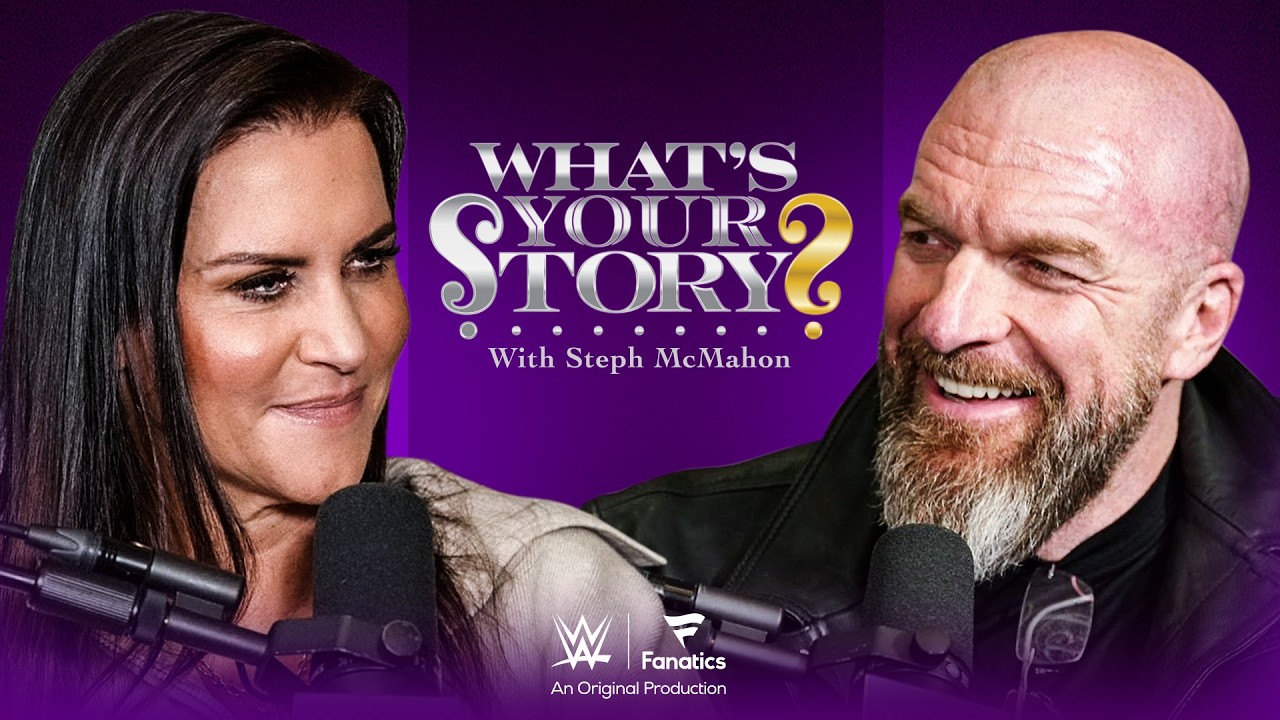
The show under review is What's Your Story? with Steph McMahon, an interview feed built around sports, business, and entertainment guests.
Why What's Your Story? is built for host-read direct response
Stephanie McMahon, the former WWE Chief Brand Officer and longtime on-air figure, hosts. That is the engine of the whole thing. The show sits in society and culture with heavy sports and business subcategories, and its advertiser behavior leans hard toward attribution.
Spotsnow data shows roughly nine in ten tracked ads are direct-response. That matters because a host-read borrows the host's credibility to move a code or a URL: promo codes, vanity links, and trackable offers only work when the audience actually listens through the break. Spotsnow estimates reach at roughly 170,000 listeners, and that figure is an estimate, not an audited count. McMahon's conversational, story-first delivery keeps attention across the read, which is exactly what a coded offer needs to land.
The show's influence is concentrated in the feed itself and around McMahon's WWE platform rather than spread thin across a dozen channels. For a direct-response buyer that concentration is the point: the audience shows up for the host, and the host is the one reading your offer.
Who is advertising on What's Your Story?
The roster is blue-chip and deep, running well past a hundred advertisers across insurance, finance, retail, autos, and sports commerce. Recognizable names include Progressive, American Express, Shopify, Sleep Number, and Toyota, alongside a sports-native cluster of Fanatics and WWE brands.
The anchor advertisers, broken down
Fanatics Fest
Fanatics Fest, the live sports-collectibles event, is the top spender. Spotsnow estimates its total spend on the show at over $100K, across roughly 58 to 68 ads, classified fully direct-response. A ticketed event aimed at sports superfans fits a McMahon audience that already lives in the WWE and Fanatics orbit.
WWE

WWE, the sports-entertainment company behind Raw, SmackDown, and WrestleMania, is the second heaviest buyer. Spotsnow estimates its spend here at over $70K across roughly 43 to 50 ads, all direct-response. The overlap is obvious: the host is a WWE icon and the audience is the wrestling faithful, so the brand is talking straight to its own base.
Fanatics Sportsbook

Fanatics Sportsbook, the sports betting arm of Fanatics, rounds out the top three. Spotsnow estimates its spend at over $50K across roughly 35 to 41 ads, weighted direct-response. Betting is a sign-up-and-deposit product, so a mostly male sports audience with a coded offer is close to the ideal target.
The outlier worth noting: Topps
Topps runs a mixed pattern here, leaning more into produced spots than the sports anchors do. Trading cards are a collector purchase, and the brand treats the feed as much as a familiarity play as a coupon channel. It is a useful reminder that a different objective can still work on this show.
| Brand | Est. total spend | Direct-response | Time of spend (last 1 year) |
|---|---|---|---|
| Fanatics Fest | over $100K | Direct-response | Active most of the year, peaking late spring |
| WWE | over $70K | Direct-response | Steady through winter and spring |
| Fanatics Sportsbook | over $50K | Direct-response | On and off across the year |
All spend figures are Spotsnow estimates.
Why entertainment brands cluster here
The advertiser mix isn't an accident. Steph McMahon is a WWE insider talking to WWE fans, and the brands buying in are the ones that sell to exactly that person: event tickets, official merchandise, sports betting. The audience skews male and mostly younger to mid-career, solidly middle-income with a high-earning core, and it's concentrated in the US. That's a sports-commerce buyer's dream, because a coded offer read by an authority the audience trusts converts on the same impulse that made them press play. When Fanatics Fest and WWE both run 40-plus reads apiece, they're not testing. They've decided the math works, and they keep re-upping.
How your ad could sound
Brooklyn Bedding host-read by Steph McMahon
This Brooklyn Bedding read is a clean template for a first-timer. It opens on personal framing ("we love Brooklyn Bedding here at What's Your Story? because a good night's sleep is the key to being ready to do all our podcasts"), which ties the product to the show's own life instead of reading like a script drop-in. The offer is unmistakable ("30% off site-wide"), the code handoff is spelled out ("promo code S-T-E-P-H"), and a credibility line about the American Chiropractic Association does the trust work without hype.
Where it could tighten: the code repeats a lot, and the close leans on repetition rather than urgency. "This offer is not available anywhere else" gestures at exclusivity but adds no deadline or scarcity, so there's no reason to act today rather than next week. A single time-boxed line would give the read the push it's missing.
View what a great sample ad looks like here.
What makes a show like this convert
- The host-read format carries the offer. Roughly nine in ten tracked ads here are direct-response, so the read is engineered to move a code, not just build a memory.
- The host has real authority. Steph McMahon is a WWE icon speaking to WWE fans, and an endorsement from someone the audience already trusts does the persuasion a produced spot can't.
- The audience is a tight target. Spotsnow estimates roughly 170,000 listeners who skew male and US-based with a high-earning core, which is why sports and money brands keep showing up.
- The anchors buy again and again. Fanatics Fest has run roughly 58 to 68 ads on this feed. Nobody repeats at that volume unless the return justifies it.
What's Your Story? in a nutshell
The audience is an estimated 170,000 mostly male, US-based listeners with a real appetite for sports and business stories. The heavy buyers are Fanatics Fest, WWE, and Fanatics Sportsbook, all running host-read direct-response at volume, alongside blue-chip names like Progressive and Amex. Inventory is sold on a quoted, per-campaign basis through the WWE and Fanatics production side rather than a large network. If your goal is coded conversions and your product fits a sports-minded audience, this is a direct-response feed first and an awareness play second.
Frequently asked questions
What's Your Story? is sold on a quoted basis rather than a public rate card. Four things move the number: placement (mid-roll host-read prices above pre-roll and post-roll), read type (a host endorsement prices above a produced spot), commitment length (multi-episode flights and category exclusivity price better than a single test), and how close you are to the air date. For market context, a host-read spot on a typical show costs a brand roughly $20 to $30 for every thousand listeners it reaches. In-demand shows clear well above that. The more useful signal for this show is who already buys: Fanatics Fest has run roughly 58 to 68 ads, alongside WWE and Fanatics Sportsbook. Repeat buying at that level tells you more about where a show prices, and what it's worth to the brands buying it, than an outside estimate can.
Ads run on most episodes, so the show is in demand and inventory moves fast. Plan on reaching out sooner than you think you need to.
Figure about 1 week to book, 2 to 3 weeks to produce and run, plus 2 to 3 weeks of lead time, so roughly 5 to 7 weeks end to end.
What's Your Story? is sold direct rather than through one of the large networks. You can approach the WWE and Fanatics production side that runs the show, or book through a platform that already has the show in its inventory. You can view different advertising platforms here.
Yes, and they're the heaviest buyers on the feed. Spotsnow shows Fanatics Fest, WWE, and Fanatics Sportsbook all running host-read direct-response at high volume, which is about as clear a fit signal as a sports-adjacent brand can get before committing budget.
What's Your Story? isn't the only feed reaching this audience. Spotsnow shows which sports and society and culture podcasts have host-read spots open right now, and which brands already buy them.
Get on the last minute spots email list.
Find incredible discounts and opportunities on premium shows.
Get on the last minute spots email list.
Find incredible discounts and opportunities on premium shows.