

How to advertise on The Catholic Talk Show: what it costs, who buys, and how to book

Lex Quintilla
Advertiser Partnerships Manager
Host-read inventory on The Catholic Talk Show is sold direct and quoted per campaign, not off a published rate card. Spotsnow data shows nearly all tracked ads on the feed are host-read direct response, and the show's single biggest advertiser, Select International, has run roughly 14 to 16 of those reads. For a buyer, that combination says something plain: this is a coded-offer feed where the hosts do the selling, and the brands that test it tend to stay. Spotsnow estimates all of this from tracked advertiser activity, not audience surveys.

You can see the full roster and spend history on the The Catholic Talk Show profile on Spotsnow.
Why The Catholic Talk Show is built for host-read direct response
Ryan Scheel and Ryan DellaCrosse host alongside Father Michael Nixon, a working Catholic priest, and both laymen came out of theology and divinity study at St. Vincent de Paul Regional Seminary. Castletown Media produces the show. It sits in religious institutions on Spotsnow, and Spotsnow data shows the direct-response share of its ads is very high, with attribution running on vanity URLs built off the show's own domain.
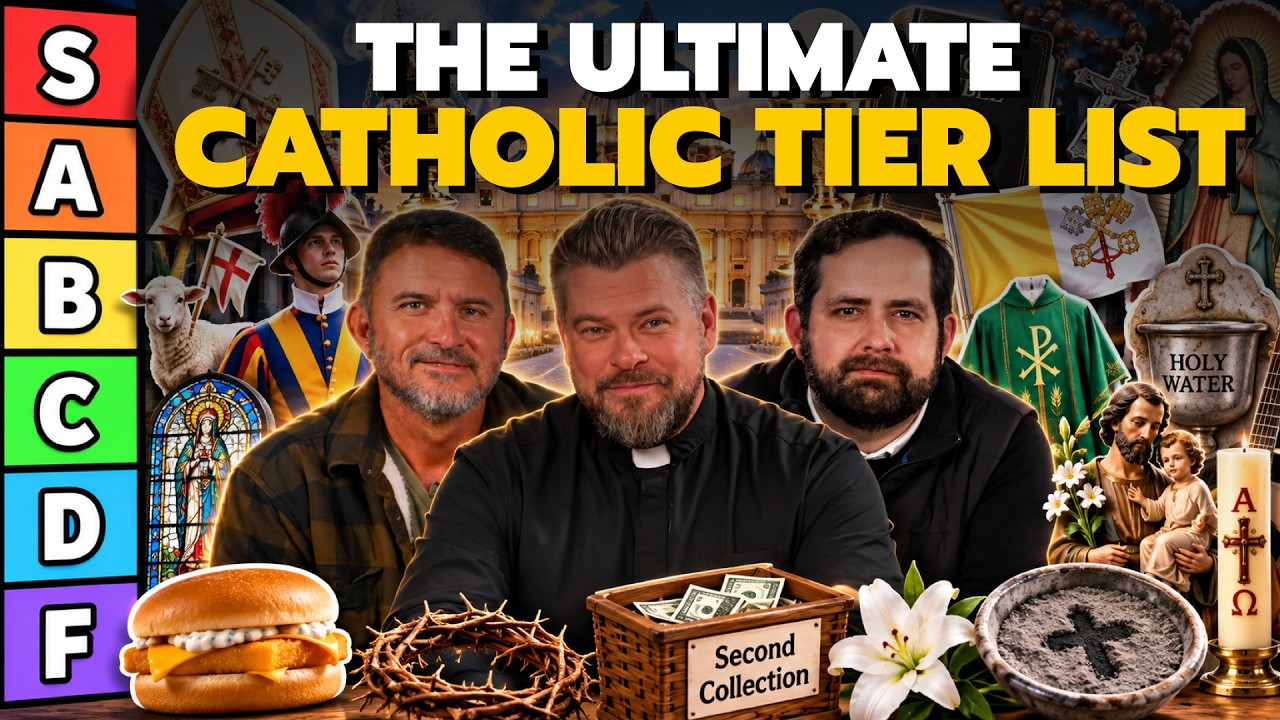
The format is why that works. Episodes run long and conversational, often structured as rankings and tier lists, which means listeners stay in the room through a tangent rather than skipping to the next segment. A host-read ad borrows that attention directly, because the read is delivered in the same voice and often folded into the bit itself. Spotsnow estimates reach at roughly 59,000 listeners, an estimate rather than an audited count. The audience skews male, sits heavily in the US, and leans toward higher-income households, which is a useful profile if your offer involves a subscription or a travel deposit.
Influence is real and spread across platforms. The show carries a 4.8-star Apple Podcasts average on roughly 1,450 to 1,600 ratings, with roughly 300,000 YouTube subscribers and roughly 65,000 Instagram followers. All of those are estimated or rounded. The YouTube number matters most here, because the video versions are where the host reads play out visibly.
Who is advertising on The Catholic Talk Show
Spotsnow tracked roughly 53 to 62 distinct brands on the show recently, and the roster splits cleanly between Catholic-endemic sponsors buying host reads and mainstream advertisers running produced spots through dynamic insertion. The most recognizable names:
- Hallow
- Indeed
- Mint Mobile
- Hilton
The anchor advertisers, broken down
Select International
Catholic pilgrimage travel, including the show's own Holy Land trips. Select International has run roughly 14 to 16 host reads, and Spotsnow estimates total spend at over $10,000. Spotsnow classifies the reads as host-read direct response. A pilgrimage is a high-consideration purchase that almost nobody buys from a banner ad, so it needs a trusted voice and repeated exposure, which is exactly what a weekly feed with a priest on the panel provides.
Hallow

A subscription prayer and meditation app. Hallow has run roughly 7 to 8 host reads with Spotsnow estimating total spend at nearly $10,000, all classified host-read direct response. The free-trial offer and a vanity URL on the show's own domain make the attribution loop short, and the product is something a listener can start using before the episode ends.
Indeed
The job board and employer recruitment platform. Indeed has run roughly 4 to 6 host reads, with Spotsnow estimating total spend at over $5,000 and classifying the activity as mixed, part host-read and part produced. The fit is less about faith and more about who's listening: parish staff, small business owners, and people who do the hiring at work.
The outlier worth noticing
Hilton runs here too, in produced thirty-second spots about college football superstitions, with no code and no URL. That's an awareness buy sitting inside a direct-response feed, and it proves the show will carry a brand-building objective if that's what you need. Just don't expect the same attribution trail the endemic sponsors get.
| Brand | Est. total spend | Direct-response | Time of spend (last 1 year) |
|---|---|---|---|
| Select International | over $10,000 | Yes, host-read | Recurring through late 2026 |
| Hallow | nearly $10,000 | Yes, host-read | Recurring through mid-to-late 2026 |
| Indeed | over $5,000 | Mixed | Recurring through late 2026 |
All spend figures are Spotsnow estimates.
Why religious institutions brands cluster here
Faith buyers have a targeting problem. The audience they want is defined by practice rather than by demographics, and no interest segment on a self-serve platform reliably finds a Catholic who prays daily and will pay for an app or a pilgrimage. This feed solves that by composition alone. Put a priest on the panel with two seminary-trained laymen, and a recommendation stops sounding like media and starts sounding like a parishioner asking a friend what he uses.
That's why Hallow, Sophia Institute Press, The Pillar, Ascension, and Ignatius Press keep returning while most mainstream brands cycle through once on a produced spot. Spotsnow data shows the endemic sponsors buy host reads almost exclusively. They're not renting reach, they're renting the hosts' standing with a US, male-leaning, higher-income audience that treats this show as catechesis it actually enjoys. Spend a thousand dollars chasing those people on social and you'll pay for a lot of impressions that never convert. Spend it on one voice they already trust, and the coded URL tells you within a week whether it worked.
How your ad could sound
Host-read on The Catholic Talk Show, starting at the ad break
This is the house style, and the Hallow segment is worth studying. What works: the hosts open with a transparent admission about the show's finances before the ask, which earns the pitch instead of interrupting for it. The offer is clean, a free trial on a vanity URL. The handoff is natural, with a co-host adding proof that no copywriter could script: "My bishop was just on there." And the sponsor gets folded into the episode's own tier-list game rather than bolted on, as in "what's almost an S tier would be if you go to catholictalkshow.com/hallow."
Two things to fix if you're briefing a read here. The vanity URL gets mangled mid-read, and that's the one element a direct-response spot cannot afford to fumble, so give the hosts a short, phonetically obvious path and ask them to repeat it identically both times. Second, there's no deadline on the trial. Add a reason to act this week and you give the listener somewhere to put the impulse the read just created.
View what a great sample ad looks like here.
What makes a show like this convert
- The format carries the ad. Long conversational episodes train listeners to stay through digressions, so a host read lands as part of the talk rather than a break in it.
- Credibility is structural. Two seminary-trained laymen and a working priest can vouch for a faith product in a way a produced spot cannot imitate.
- The audience is specific and solvent. Spotsnow estimates roughly 59,000 listeners, skewing male, US-based, and toward higher-income households.
- Repeat buying proves the math. Select International's roughly 14 to 16 reads, with Hallow at roughly 7 to 8, is the behavior of advertisers watching their own attribution data and renewing.
The Catholic Talk Show in a nutshell
The listeners are practicing US Catholics, skewing male and toward higher-income households, and Spotsnow estimates the audience at roughly 59,000. The brands already buying split into endemic sponsors taking host reads with coded offers and mainstream advertisers taking produced spots. Inventory is sold direct, quoted per campaign, with Castletown Media behind the production. If your goal is coded, trackable response from a faith audience, this feed is built for it, and it will still carry an awareness buy if that's the brief instead.
Frequently asked questions
The Catholic Talk Show is sold on a quoted basis rather than a public rate card. Four things move the number: placement (mid-roll host-read prices above pre-roll and post-roll), read type (a host endorsement prices above a produced spot), commitment length (multi-episode flights and category exclusivity price better than a single test), and how close you are to the air date. For market context, a host-read spot on a typical show costs a brand roughly $20 to $30 for every thousand listeners it reaches. In-demand shows clear well above that. The more useful signal for this show is who already buys: Select International has run roughly 14 to 16 reads, alongside Hallow and Indeed. Repeat buying at that level tells you more about where a show prices, and what it's worth to the brands buying it, than an outside estimate can.
Ads run on most episodes, so the show is in demand and inventory moves fast. Plan on reaching out sooner than you think you need to.
Figure about 1 week to book, then 2 to 3 weeks to produce and run, plus 2 to 3 weeks of lead time, so roughly 5 to 7 weeks end to end.
The Catholic Talk Show is sold direct rather than through one of the large networks. You can approach the host's representation, Castletown Media, or book through a platform that already has the show in its inventory. You can view different advertising platforms here.
Both, and the split is the useful part. Spotsnow data shows the endemic Catholic sponsors buy host reads with coded URLs almost exclusively, while mainstream brands like Hilton and LinkedIn mostly appear in produced spots. If you want attribution, brief a host read. If you want frequency against a faith audience without a coded offer, the produced route exists.
The Catholic Talk Show isn't the only feed reaching this audience. Spotsnow shows which religion and spirituality podcasts have host-read spots open right now, and which brands already buy them.
Get on the last minute spots email list.
Find incredible discounts and opportunities on premium shows.
Get on the last minute spots email list.
Find incredible discounts and opportunities on premium shows.