

How to advertise on Random Order Podcast: what it costs, who buys, and how to book

Aiza Arcilla
Campaign Operations Manager
Random Order Podcast sells its host-read inventory through Headgum, the comedy network that reps 30-plus shows, and like most host-read buys it's quoted per campaign rather than off a public rate card. Spotsnow data shows the tracked advertiser activity on this feed is effectively all direct response, meaning coded offers and tracked URLs rather than brand spots. Factor, the top spender, has run a small but repeated set of host-reads, and Spotsnow attributes over $3K in estimated total spend to the brand on this show. For a buyer, that mix says one thing: this is a performance feed first, and the brands that come back do so because the codes move. Spotsnow estimates all of this from tracked advertiser activity, not audience surveys.

You can see the full advertiser history and roster on the Random Order Podcast profile on Spotsnow.
Why Random Order Podcast is built for host-read direct response
The show is hosted by brothers Jermaine and Trevaunn "Trey" Richards with Sheldon Sabastian. Trey is a Canadian comedian, writer and actor who co-founded the viral Toronto sketch group 4YallEntertainment and co-created the Crave series The Office Movers, so the comedy credential is earned on camera as well as on mic. Spotsnow files the show under comedy, with society and culture, leisure, and TV and film underneath it.
Spotsnow data shows direct response accounts for effectively all of the tracked host-read activity here. That matters because every one of those reads carries something measurable: Factor runs a vanity URL, GLD runs a spoken code, and the GLD read even asks listeners to name the show at checkout. Spotsnow estimates the audience at roughly 64,000 listeners, and that figure is an estimate, not an audited count.
The format argument is the real one. This is an unscripted, three-way conversation that wanders from wooden roller coasters to alien invasions, which means listeners aren't skipping to a segment, they're along for the whole hang. When the read arrives mid-banter in the host's own voice, it borrows that attention instead of interrupting it. Produced spots on a feed like this get tuned out. Endorsements don't.
The engagement signals back it up. Spotsnow social stats show a flat 5.0 average Apple Podcasts rating across roughly 1,730 to 2,018 ratings, about 150,000 YouTube subscribers, and roughly 81,000 Instagram followers. Influence here is video-first and spread across platforms, which is why the strongest reads on this show also exist as watchable clips.
The audience, per Spotsnow, skews young and mostly male, with earning power that sits at the earlier-career end, and it's heavily concentrated in the US with a real Canadian slice that tracks back to the hosts' Toronto roots.
Who is advertising on Random Order Podcast
The roster splits cleanly between national produced buys and DTC host-reads, and Spotsnow logged roughly 24 to 28 distinct advertisers across the last three months. The names a buyer will recognize fastest:
- Squarespace
- American Express
- Progressive Insurance
- McDonald's
- Factor
The anchor advertisers, broken down

Factor
Factor sells chef-prepared, dietitian-designed meals shipped ready to heat, and Spotsnow lists it as the top spender on the show with over $3K in estimated total spend. Spotsnow classifies the activity as direct response and shows it as a repeat host-read buyer rather than a one-off test. The fit is almost too neat: a young, time-pressed, gym-adjacent male audience that eats on the move and will absolutely act on a half-price first box.

GLD
GLD is the Miami-based jewelry and lifestyle brand that sells real-gold chains, bracelets and rings at a price point built for people who assumed good jewelry was out of reach. Spotsnow attributes over $2K in estimated total spend on this show and classifies the buy as direct response, run as host-read. Sneaker and streetwear culture is a stated interest of the hosts, and the brand's athlete and musician associations land with a pop-culture audience that already argues about fits and chains on air.
Squarespace
Squarespace sells website building, hosting, domains and commerce tools aimed at creators and small businesses. Spotsnow puts its estimated total spend on the show at over $1K and classifies it as direct response. The pitch writes itself when the hosts are themselves a multi-platform media brand with a podcast, a merch line and a TV credit, because the ad is describing the audience's own side project back to them.
The awareness outlier
Not everything here is coded. Progressive, McDonald's and American Express all show up in Spotsnow's recent roster with produced national spots, which tells you awareness dollars find this feed too. If you're buying for reach and association rather than attribution, you wouldn't be the first.
| Brand | Est. total spend | Direct-response | Time of spend (last 1 year) |
|---|---|---|---|
| Factor | over $3K | Yes, host-read | Ran through 2026, most recent reads mid-2026 |
| GLD | over $2K | Yes, host-read | Active through 2026, most recent September 2026 |
| Squarespace | over $1K | Yes, host-read | Active through August 2026 |
All spend figures are Spotsnow estimates.
Why comedy brands cluster here
Comedy feeds get bought for one of two reasons: cheap attention, or trusted voice. This one gets bought for the second. The hosts built an audience on relatable Toronto humor before they built a podcast, so the relationship predates the ad break, and that's what makes a coded read work. A listener who has followed 4YE clips since YouTube doesn't experience a Factor plug as media, they experience it as Trey telling them what he ate yesterday.
That's also why the DTC names on the list look the way they do. Meals, jewelry, website tools. Each one maps to something a young, mostly male, mostly American audience is already spending on, and each one is cheap enough to buy on impulse with a code in hand. The national produced spots pay for the reach. The host-reads pay for the trust, and the trust is what converts.
How your ad could sound
Factor host-read on Random Order Podcast
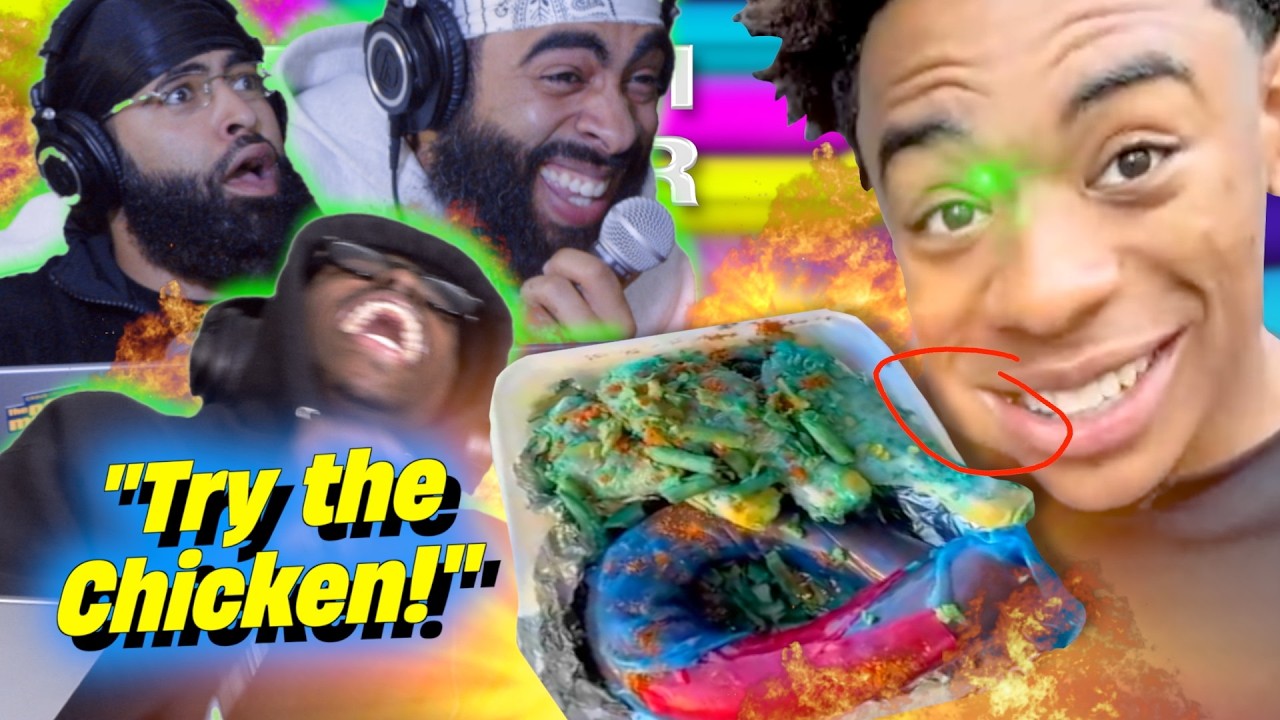
The Factor read is a clinic in the first half. It hands off out of conversation instead of cutting to a sponsor bumper, opens on a real listener state ("staying locked in takes focus, especially with the warm weather on the way"), and compresses the whole value prop into five words: "Meal prep without the prep." Then comes the part no script can fake. "Yesterday, I had the pulled barbecue chicken. It came with a little mac on the side. Yo, it was good." That line is the ad.
Two things to fix if you're writing the next one. The code, spoken as "randomorder50 off," is a mishear waiting to happen and a typo waiting to kill a conversion. Say it twice, slowly, and keep it to one word a listener can type one-handed. And the ingredient and terms rundown runs long enough that the offer has to fight its way back out, so trim the feature list and let the call to action land last and loudest.
View what a great sample ad looks like here.
What makes a show like this convert
- Host-read beats produced on this feed. Spotsnow data shows the tracked host-read activity here is effectively all direct response, with codes and vanity URLs doing the attribution work.
- The credibility is pre-existing. A flat 5.0 Apple rating across roughly 1,730 to 2,018 ratings, per Spotsnow social stats, is not a casual audience.
- The audience matches the offer. Spotsnow estimates roughly 64,000 listeners, skewing young and male and concentrated in the US, which is exactly who buys meal kits, chains and a first website.
- The anchor advertisers come back. Spotsnow shows Factor as a repeat host-read buyer with over $3K in estimated total spend on the show, and GLD running again as recently as September 2026. Nobody re-ups on a feed that doesn't pay out.
Random Order Podcast in a nutshell
The listener is young, mostly male, US-heavy with a Canadian tail, and just as likely to watch the episode as hear it. The brands already spending are DTC names buying host-voiced endorsements with codes attached, with big national advertisers running produced spots alongside them. It's sold through Headgum, quoted per campaign, and the host endorsement is the format worth paying for. If your KPI is a tracked conversion rather than a brand lift study, this feed fits.
Frequently asked questions
Random Order Podcast is sold on a quoted basis rather than a public rate card. Four things move the number: placement (mid-roll host-read prices above pre-roll and post-roll), read type (a host endorsement prices above a produced spot), commitment length (multi-episode flights and category exclusivity price better than a single test), and how close you are to the air date. For market context, a host-read spot on a typical show costs a brand roughly $20 to $30 for every thousand listeners it reaches. In-demand shows clear well above that. The more useful signal for this show is who already buys: Factor has run roughly 2 host-reads, alongside GLD and Squarespace. Repeat buying at that level tells you more about where a show prices, and what it's worth to the brands buying it, than an outside estimate can.
This show has ad spots open, so there's a good chance you could move quickly.
Budget about 1 week to book, 2 to 3 weeks to produce and run, plus 2 to 3 weeks of lead time, so roughly 5 to 7 weeks end to end.
Random Order Podcast is sold through Headgum. You can approach them directly, or book through a platform that already has the show in its inventory. You can view different advertising platforms here.
Yes, and they're the core of the host-read business. Spotsnow lists Factor, GLD, Squarespace and Stitch Fix among the brands buying endorsement reads, with national advertisers running produced spots in the same feed. Spotsnow logged roughly 24 to 28 distinct advertisers over the last three months, so category company is easy to check before you commit.
Spotsnow estimates roughly 64,000 listeners, an estimate rather than an audited count. The audience skews young and mostly male, sits at the earlier-career end of the income range, and is heavily US-based with a meaningful Canadian share. It's also a video-first crowd, with about 150,000 YouTube subscribers in Spotsnow's social stats.
Random Order Podcast isn't the only feed reaching this audience. Spotsnow shows which comedy podcasts have host-read spots open right now, and which brands already buy them.
Get on the last minute spots email list.
Find incredible discounts and opportunities on premium shows.
Get on the last minute spots email list.
Find incredible discounts and opportunities on premium shows.