

How to advertise on Barn Talk: what it costs, who buys, and how to book

Lex Quintilla
Advertiser Partnerships Manager
Barn Talk sells its host-read inventory direct, straight through the hosts rather than a network, and it's quoted per campaign instead of off a public rate card. Spotsnow attributes nearly 9 in 10 of the sponsor reads on the show to direct response, and Spotsnow data shows the top-spending advertiser, Propane, has run roughly 5 to 7 ads there. For a buyer, that mix says something simple: this is a conversion feed where endemic ag money and national DTC money sit side by side. Spotsnow estimates all of this from tracked advertiser activity, not audience surveys.

The show is Barn Talk, a weekly conversation about ag markets, farm finance and kitchen table economics recorded on a working Iowa hog and row crop operation.
Why Barn Talk is built for host-read direct response
Tork and Sawyer Whisler are a father and son team running the sixth-generation This'll Do Farm in Iowa, and they also sell meat direct to consumers under their own Farmer Grade brand, which means they pitch products as operators who have had to sell something themselves. Their advertiser base sits in farming and adjacent business categories, and Spotsnow attributes close to 9 in 10 reads on the feed to direct response. That matters because DR reads carry the machinery buyers need: a spoken URL, a code, a trackable landing page. Spotsnow estimates the audience at roughly 94,000 listeners, and that is an estimate, not a counted figure.
Forget pricing for a second and look at the format. Barn Talk runs long, loose and conversational, with market updates and guest interviews that listeners stay inside for an hour or more. There's no hard pivot into an ad bed. The host finishes a thought about basis or a bigger operating line, then keeps talking, and the sponsor shows up in the same voice. That continuity is the whole asset a host-read borrows. Attention that was already engaged doesn't reset when the sponsor's name lands.
Influence backs it up. Barn Talk holds about 4.9 stars on Apple Podcasts across roughly 1,540 to 1,800 ratings, and the Barn Talk YouTube channel carries roughly 272,000 subscribers. The video side is a genuine second surface here, not an afterthought, so a host-read often gets watched as well as heard.
On who's listening: Spotsnow data shows the audience skews male, older, middle-income and heavily concentrated in the United States. Think farm owners and operators, not hobbyists.
Who is advertising on Barn Talk
The roster splits cleanly into endemic ag money and national consumer money, which is unusual for a show this size. Spotsnow lists Indeed, Iowa Corn, Propane, Rocket Mortgage and Darn Tough among the brands detected on the feed, with ag lenders and farm expos filling in behind them.
The anchor advertisers, broken down

Propane
Propane, the industry's congressionally chartered education and research council, is the top spender Spotsnow tracks on the show. Spotsnow data shows roughly 5 to 7 ads and estimated total spend of over $5K, classified entirely as direct response. Propane equipment is a real line item for grain drying and irrigation, so the pitch isn't abstract: it's a fuel decision this audience makes every harvest.

Iowa Corn
Iowa Corn is the growers' advocacy and promotion group, covering both the association and the promotion board. Spotsnow data shows roughly 8 to 9 ads and estimated total spend of over $5K, mostly direct response with a slice of awareness. The fit is almost too literal. The hosts grow corn in Iowa, and so do a lot of the people listening, so a membership or checkoff message lands as peer-to-peer rather than institutional.
Indeed
Indeed, the global job-search and hiring platform, is the most frequent of the three. Spotsnow data shows roughly 13 to 15 ads and estimated total spend of over $4K, classified fully as direct response. Farms are employers, and finding reliable seasonal help is a recurring complaint on this show, which makes a hiring platform less of a national blanket buy and more of a targeted one.
The outlier: Darn Tough
Darn Tough shows up differently. The American-made sock brand got an unpaid-sounding tip of the hat inside a conversation about gear that lasts, which is affinity rather than attribution. It's proof that a brand-building objective can work on this feed if the product survives actual farm use, and that the hosts will say so without a code attached.
| Brand | Est. total spend | Direct-response | Time of spend (last 1 year) |
|---|---|---|---|
| Propane | over $5K | Direct-response | Recent, concentrated in later months |
| Iowa Corn | over $5K | Mostly direct-response | Spread across the year |
| Indeed | over $4K | Direct-response | Spread across the year, heaviest earlier |
All spend figures are Spotsnow estimates.
Why business brands cluster here
Barn Talk sits in the business category, and the advertiser mix explains why that classification is the right read. A farm is a capital-intensive small business with payroll, debt, inventory risk and a tax problem. The Whislers talk about it that way, and Spotsnow data shows the sponsors who repeat here are the ones selling into that reality: fuel programs, ag lending, commodity groups, hiring tools. Endemic brands buy because the audience is literally their customer base. Finance and hiring brands buy because this audience signs purchase orders, not because it's a demographic match on paper.
The authority piece is harder to replicate than the reach. A banker's ad read by a banker is a commercial. The same ad read by someone who has sat across from a lender during a bad basis year is a recommendation. That's the arbitrage buyers are paying for on a show like this, and it's why the DR share stays high even with national brands in the rotation.
How your ad could sound
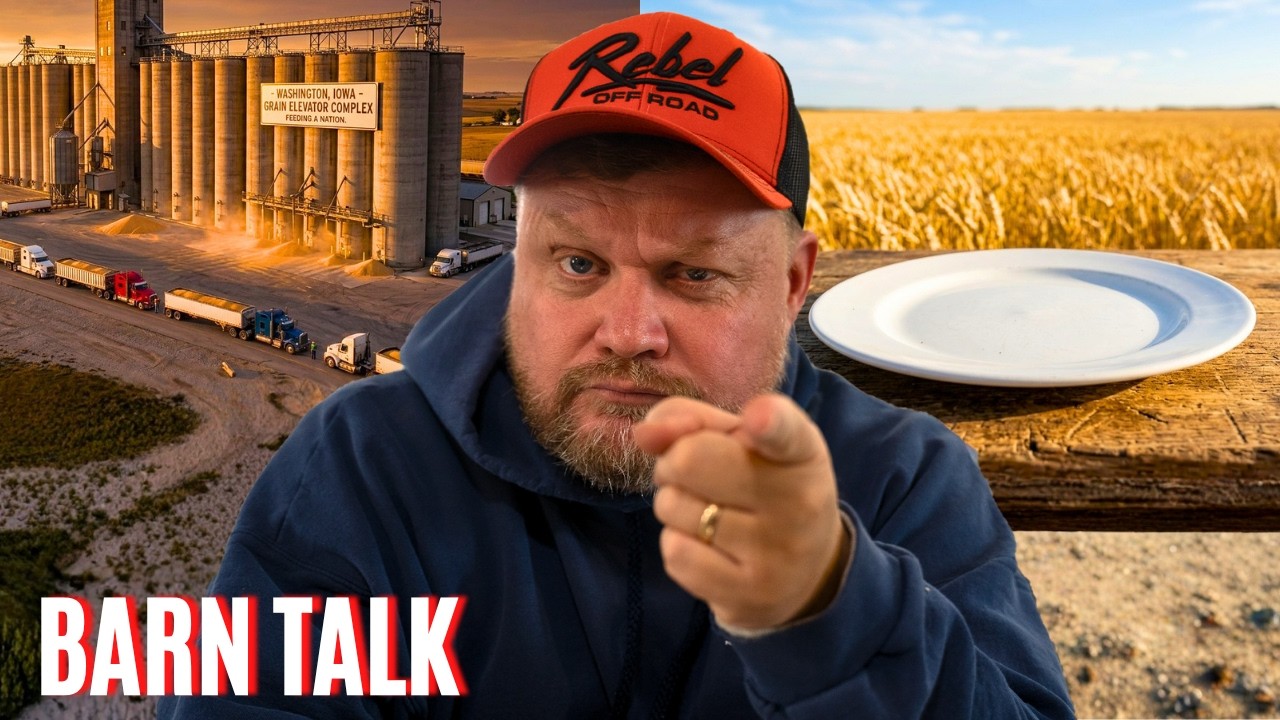
Host-read sponsor spot on Barn Talk
This is a host-read market-update sponsorship, and the hook does the heavy lifting. The host frames the product as a problem the listener already has: "this may be the year that you need a lot bigger line of credit than what you've had in the past." Then the line that actually sells it, "if you feel like you're getting the cold shoulder on that." That's farmer-to-farmer language about a lender relationship going sideways, and it's specific enough to be uncomfortable, which is why it works. The handoff is clean too, because the read is bolted onto the market segment where credit is already the subject.
Two things a brand should fix before buying a read like this. The close is soft: "see if they can help you with that" asks for nothing and sets no deadline. And the URL is spoken once, mid-sentence, with no code and no reason to act this week. Give the host a short offer and a one-breath destination, and the same read converts harder without losing a single thing that makes it sound native.
View what a great sample ad looks like here.
What makes a show like this convert
- The format carries the ad instead of interrupting it. Long host-driven episodes mean the sponsor arrives in the same voice listeners came for, which is why Spotsnow attributes close to 9 in 10 reads here to direct response.
- The hosts have standing to recommend. Tork and Sawyer Whisler run a sixth-generation Iowa farm and a direct-to-consumer meat brand, so product claims get tested against their own operation.
- The audience buys at business scale. Spotsnow estimates roughly 94,000 listeners, skewing male, older and US-concentrated, and heavily made up of people making equipment, input and financing calls.
- Advertisers come back. Propane has run roughly 5 to 7 ads on the show per Spotsnow, and Indeed roughly 13 to 15. Nobody renews a read that doesn't pay.
Barn Talk in a nutshell
Spotsnow estimates roughly 94,000 listeners, mostly American men in the back half of their careers who farm or run something adjacent to farming. The buyers already on the feed are a mix of ag institutions and national platforms, and the reads that anchor it are host endorsements rather than dropped-in produced tape. It's sold direct by the hosts and quoted per campaign, and ads run on most episodes, so the calendar fills early. If your KPI is a trackable signup, a dealer lead or a coded order, the posture of the show matches your brief.
Frequently asked questions
Barn Talk is sold on a quoted basis rather than a public rate card. Four things move the number: placement (mid-roll host-read prices above pre-roll and post-roll), read type (a host endorsement prices above a produced spot), commitment length (multi-episode flights and category exclusivity price better than a single test), and how close you are to the air date. For market context, a host-read spot on a typical show costs a brand roughly $20 to $30 for every thousand listeners it reaches. In-demand shows clear well above that. The more useful signal for this show is who already buys: Propane has run roughly 5 to 7 ads, alongside Iowa Corn and Indeed. Repeat buying at that level tells you more about where a show prices, and what it's worth to the brands buying it, than an outside estimate can.
Ads run on most episodes, so the show is in demand and inventory moves fast. Plan on reaching out sooner than you think you need to.
Budget about 1 week to book, 2 to 3 weeks to produce and run, plus 2 to 3 weeks of lead time, so roughly 5 to 7 weeks end to end.
Barn Talk is sold direct rather than through one of the large networks. You can approach the hosts, or book through a platform that already has the show in its inventory. You can view different advertising platforms here.
Yes, and they're the backbone of the roster. Spotsnow data shows Iowa Corn and Propane among the top spenders on the show, with ag lending and farm expo brands appearing alongside national names like Indeed and Rocket Mortgage. If you're selling inputs, equipment, credit or hiring tools, the category is already proven here.
Spotsnow estimates roughly 94,000 listeners, skewing male, older, middle-income and strongly concentrated in the United States. Those figures are estimates. The show also carries about 4.9 stars on Apple Podcasts and roughly 272,000 subscribers on YouTube, so a read reaches an audio and a video audience.
Barn Talk isn't the only feed reaching this audience. Spotsnow shows which business podcasts have host-read spots open right now, and which brands already buy them.
Get on the last minute spots email list.
Find incredible discounts and opportunities on premium shows.
Get on the last minute spots email list.
Find incredible discounts and opportunities on premium shows.